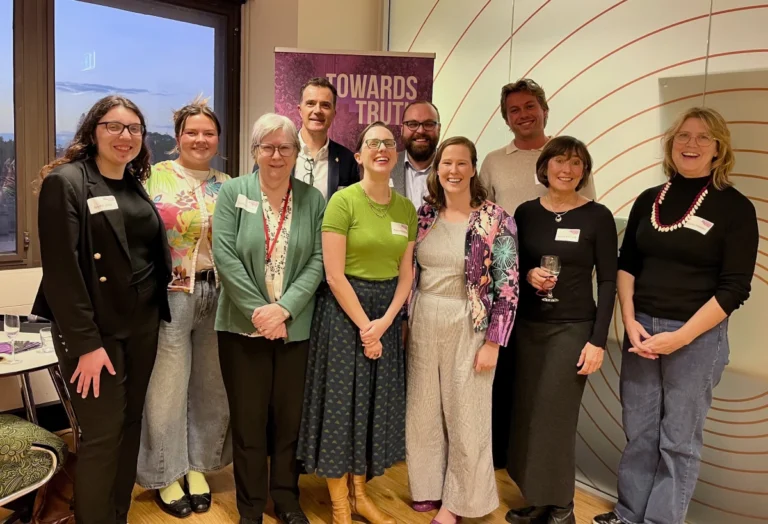
The Justice and Equity Centre, the NSW Council of Social Service and Just Reinvest NSW are calling on the NSW Government to make public transport free for every child under 18.
At a time when families are struggling with the cost of living, providing free public transport for children offers tangible relief for families while delivering significant public policy benefits.
The coalition has released a proposal giving reasons for this reform, which lays out the substantial benefits it will deliver to the community.
The proposal: Free public transport for NSW children
Executive Summary
Public transport should be free for children in NSW. This would:
- Provide much-needed cost-of-living relief for families that need it the most, putting up to $1,300 a year per child back in family budgets.
- Help children get a good start: supporting them to get to work, engage in sport and access community services and activities.
- Simplify travel for school children and save time and money currently spent pursuing fines from children who cannot afford to travel.
Introduction
At a time when families are struggling with the cost of living, providing free public transport for children offers tangible relief for families while delivering significant public policy benefits.
Every child in NSW should be able to get to sport, to their work in an apprenticeship or part-time job, be part of community events, access community services, and see family and friends, without the cost of the fare being a barrier.
Children shouldn’t miss out on opportunities to be part of the community because they can’t afford public transport – or risk a fine they cannot pay if their Opal Card runs out.
The current system is inefficient – requiring administration of a complex school transport system and imposing on police, transit officers and staff at Revenue NSW to chase up fines from children who cannot pay.
Victoria has led the way with free public transport for children since 1 January 2026. It is an affordable and proven reform: it was costed at $52–60 million a year for NSW in 2019, has been budgeted at about $90 million a year in Victoria. Similar initiatives been shown in Queensland, Scotland and Toronto to support more children to travel.
1. Real relief for families
Families are paying more for public transport than most people realise. Children aged 4 to 15, and school students aged 16 and over, can pay up to $9.65 a day and $25 a week on the Opal network: as much as $1,300 a year for a child who travels regularly, and thousands of dollars for a family with multiple children.1
Free school travel does not close the gap: the School Student Transport Scheme (SSTS) covers only approved home-to-school trips in term time, on nominated routes, for students who meet distance rules.2 Use a school Opal Card for anything else and the reader rejects it – and you are traveling unlawfully. Families currently have to buy and top up a second Opal Card for anything that isn’t school travel.
Saturday sport, a shift at work, the orthodontist, the school holidays: families are required to pay. When fares add up, many parents drive instead, paying for fuel and taking time out of their own working day. Free travel makes it easier for children get there on their own.
Sixteen- and seventeen-year-olds who leave school lose their access to children’s fares. Apprentices, trainees and job seekers can access discounted fares, but must first apply for a separate concession card. Those working in other jobs pay full adult fares of up to $50 per week.
Free public transport for children would provide real relief where it is needed most. In the growth areas of Western Sydney, the Central Coast, the Hunter and Illawarra, and in regional towns, families with children rely on public transport. Victoria made its scheme statewide for exactly this reason, including children in areas without myki readers.3
2. Helping children get a good start
When cost is a barrier, children stop participating. Research in Melbourne’s west found students were missing school and activities because they could not afford transport, and accumulating transport debt and fines. One 16-year-old accumulated almost $2,000 in fines; his family borrowed money to pay them off, and he left school to work off the debt.4
Children in NSW face the same barriers. We want our children on the sporting fields, in the workplace and accessing the broader the community – not staying home because they didn’t have the money for the train, bus or ferry. Children and young people have told the NSW Advocate for Children and Young People that poor access to transport limits their ability to get to education and training, and some have said they skip meals to pay for transport.5
Charging children fares also means spending money on a system to catch and punish the ones who cannot pay.6 University of Wollongong research found that between 2017 and 2025, 376,446 public transport fines were issued to young people aged 12–25 – the single most common type of fine issued to young people in NSW.
Eight areas of relative disadvantage account for 63 per cent of these fines: Blacktown, Liverpool, Mount Druitt, Parramatta, St Marys, Penrith and Campbelltown in Western and South-Western Sydney, and Gosford on the Central Coast.7
A child caught without a ticket faces a $50 penalty. If it goes unpaid, Revenue NSW adds a $25 fee and pursues the debt through payment plans, Work and Development Orders, hardship write-offs or the Children’s Court.8
Aboriginal children bear the heaviest burden. Aboriginal people are over-represented among fine recipients and less able to pay at first notice.9
None of this recovers meaningful money. It just makes it harder for children to participate, and burdens families with stress and debt when they are struggling with the cost of living.
3. An affordable and proven solution
The cost is modest
In 2019 the NSW Parliamentary Budget Office costed free Opal travel for children aged 4-15 and school students at $52-60 million a year. Those figures were made up of foregone fare revenue, with no extra services required.10
Victoria budgeted about $90 million a year for free public transport for all under-18s – a total of $318.2 million for the three and a half years from 1 January 2026 to June 2029.11
While any costing should be undertaken by the Parliamentary Budget Office to cover all under-18s in NSW and include non-Opal services, it is reasonable to expect a cost of in the order of $100 million a year. By comparison, Transport for NSW estimates that the network lost $79.4 million to fare non-compliance across all passengers in the first six months of 2026 alone.12
The savings are real
- School travel bureaucracy. The $550 million SSTS requires every student to apply, every school to endorse and confirm attendance, and Transport for NSW to assess distance rules and run an appeals panel.13 A simpler, universal system delivers a major saving by eliminating these costs.
- Police and transport officers. Police Transport Command officers and more than 800 authorised officers check tickets and concession entitlements across the network.14 The time and energy of police and transit officers would be better directed to work that improves community safety.
- Revenue NSW. The Department is responsible for issuing, escalating, pursuing, negotiating and writing off thousands of children’s transport fines and work development orders every year.15
- Legal Aid, the Aboriginal Legal Service and community legal centres. Legal Aid NSW runs a statewide WDO service of six teams of solicitors and community engagement officers and delivers more than 200 fines education sessions a year. The Aboriginal Legal Service has had to close its fines service to new clients because of demand.16 Every child’s transport fine that a lawyer helps write off is publicly funded legal time that could go to a family facing eviction or domestic violence.
And the social benefits of cost-of-living relief and increased children’s participation in work, sport and community life are substantial.
Free travel for every child would put money back in families’ pockets, get children to sport, work and community activities, and take pressure off NSW Police, Revenue NSW and the legal assistance sector.
We call on the NSW Government to support cost of living relief and help children get a good start by making public transport free for children.
Download a PDF of the proposal
- Transport for NSW, Child Opal Fares (from July 2025). ↩︎
- Public transport concessions for school and TAFE students. ↩︎
- Victorian Budget 2025/26; Premier of Victoria, One Million Young Victorians Now Travelling For Free, 1 January 2026. ↩︎
- WEstjustice and Victoria University, Fare Go: Myki, Transport Poverty and Access to Education in Melbourne’s West(2016). ↩︎
- Advocate for Children and Young People, The NSW Strategic Plan for Children and Young People 2022–2024, pp 29, 71. ↩︎
- Revenue NSW 2025/26 data. ↩︎
- Julia Quilter and Grace Bowles, “Fare evasion by young people in New South Wales: Time to decriminalise?” (2026)Alternative Law Journal, first published online 2 September 2026. ↩︎
- Legal Aid, “Fined out: A practical guide for people having problems with fines”. ↩︎
- ALRC, Pathways to Justice (Report 133, 2018), ch 12. ↩︎
- NSW Parliamentary Budget Office, Election Policy Costing A142 – Free Travel for Children (Australian Labor Party), 18 March 2019. ↩︎
- Victorian Budget 2025/26. ↩︎
- Transport for NSW, Fare Compliance Survey Results: May 2026 (September 2026), table “Compliance and estimated revenue loss by mode”: $79,428,000 for January to June 2026. The survey does not break revenue loss down by age or ticket type. ↩︎
- Transport for NSW – School Student Transport Scheme Statistics. ↩︎
- Transport for NSW: Fare compliance and fines. ↩︎
- Work and Development Order Scheme, Year in Review 2021/22 (Revenue NSW, DCJ, Legal Aid NSW). A Work and Development Order (WDO) is a program to reduce fines by up to $1,000 a month by doing unpaid work, courses, counselling, mentoring or treatment programs. ↩︎
- WDO Guidelines 2024; Aboriginal Legal Service (NSW/ACT), Fines service page. ↩︎